
/2009/10/mb.jpg)
/2019/04/Gavin-Maloof.jpg)
/2022/05/adrienne.jpg)
/2011/02/Pierre-Luc-Gagnon.jpg)
/2020/09/Paul-Nassif.jpg)
/2020/06/taylor.png)
:strip_exif()/2015/09/GettyImages-476575299.jpg)
/2009/09/Cristiano-Ronaldo.jpg)
/2009/09/Brad-Pitt.jpg)
/2019/10/denzel-washington-1.jpg)
/2009/11/George-Clooney.jpg)
/2018/03/GettyImages-821622848.jpg)
/2009/09/Jennifer-Aniston.jpg)
/2017/02/GettyImages-528215436.jpg)
/2019/04/rr.jpg)
/2020/04/Megan-Fox.jpg)
/2019/11/GettyImages-1094653148.jpg)
What is the Maloof Family's net worth?
The Maloof Family is an American business dynasty who have a combined net worth of $1 billion. The Maloof family's wealth traces back to immigrant entrepreneurship, exclusive beer distribution rights, and decades of aggressive expansion into casinos, professional sports, banking, and entertainment. Best known publicly for their ownership of major sports franchises and the rise and fall of the Palms Casino Resort in Las Vegas, the Maloofs quietly built a billion-dollar private empire long before reality television and NBA headlines made their name widely recognizable. At their peak, the family controlled a sprawling portfolio across the Western United States, anchored by beer distribution monopolies and later amplified through leveraged bets on gaming and sports.
The modern Maloof fortune was shaped by a combination of disciplined private ownership and unusually public second-generation ambition. While the family patriarch built wealth through low-profile, cash-flow-driven businesses, his children pushed the brand into high-visibility industries that brought prestige, influence, and risk in equal measure. The Maloof story is ultimately one of classic American family capitalism: immigrant roots, explosive growth, internal conflict, headline-grabbing success, and a gradual unwinding of the original fortune as markets shifted and leverage caught up with ambition.
Immigrant Roots and the Coors Foundation
The Maloof family's American story begins with Joseph Maloof, a Lebanese immigrant who settled in New Mexico in the early 20th century. In 1937, he secured exclusive distribution rights for Coors beer in large portions of the Southwest, an asset that would become the foundation of the family's wealth. At a time when Coors was not widely available east of the Rockies, regional distribution rights were extraordinarily valuable, producing steady, recession-resistant cash flow.
Joseph's son, George J. Maloof Sr., took control of the business after his father suffered a heart attack in 1944. George Sr. expanded aggressively, using beer profits to move into hotels, trucking, and banking. By the 1960s and 1970s, the Maloofs had become one of the most powerful privately held business families in New Mexico, operating largely out of public view.
George J. Maloof Sr. and the First Empire
Born in 1923, George Maloof Sr. was the architect of the modern Maloof empire. He believed in diversification but insisted on family control, keeping the business private and tightly held. Under his leadership, the Maloofs accumulated assets across hospitality and finance while maintaining their grip on the Coors distributorship, which continued to generate the bulk of the family's liquidity.
In 1979, the family made its first major move into professional sports by acquiring the NBA's Houston Rockets. During Maloof ownership, the Rockets reached the NBA Finals in 1981, a high-water mark that established the family's credibility as sports owners. The team was sold in 1982, shortly after George Sr.'s death, but the experience set the stage for far larger sports investments decades later.
George Sr. died in 1980, triggering lawsuits from extended family members that sought to liquidate the holdings. Despite the internal conflict, control ultimately remained with his widow Colleen Maloof and their five children. By 2000, Business Week estimated the Maloof family's net worth at more than $1 billion.
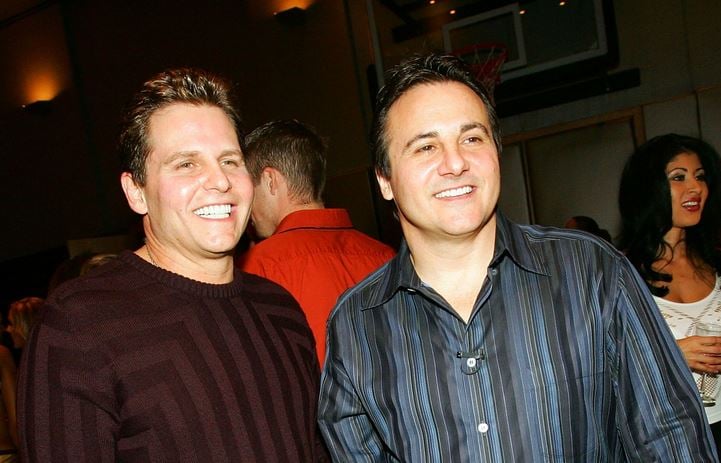
Ethan Miller/Getty Images
The Second Generation Takes Control
Leadership passed to the next generation: Joe, Gavin, Adrienne, George Jr., and Phillip Maloof. Unlike their father, the siblings embraced visibility, particularly Joe and Gavin, who became the public faces of the family's expansion into Las Vegas and professional sports.
The family's defining Las Vegas move came in 1994 with the opening of the Fiesta Rancho casino in North Las Vegas. The property was sold in 2000 for more than $185 million, with proceeds reinvested into a far more ambitious project: the Palms Casino Resort.
The Palms Casino Resort Era
Opened in 2001 under the operational leadership of George J. Maloof Jr., the Palms was deliberately positioned as a cultural disruptor rather than a traditional Strip casino. It became synonymous with celebrity nightlife, MTV culture, and high-end excess, hosting events such as the MTV Video Music Awards and major Hollywood premieres.
For several years, the Palms was wildly profitable and culturally influential. However, expansion of the Palms Towers and broader market pressures left the property heavily leveraged. By 2011, the Maloofs were forced to restructure ownership, selling control to private equity firms while retaining only a small stake. To stabilize the casino, the family also sold their historic beer distribution business, effectively liquidating the asset that had created their fortune.
NBA Ownership and the Sacramento Kings
The Maloofs returned to professional basketball in 1998 with a minority stake in the Sacramento Kings, taking majority control the following year. Operated primarily by Joe and Gavin Maloof, the Kings became the family's most visible asset and, ultimately, its most contentious.
Disputes with the city of Sacramento over public funding for a new arena led to years of relocation threats involving Anaheim and Seattle. The saga highlights both the leverage sports owners wield and the reputational cost of aggressive negotiation tactics. In 2013, after the NBA blocked a proposed move to Seattle, the Maloofs sold their controlling stake in the Kings to a Sacramento ownership group led by Vivek Ranadivé for $347 million, implying a $534 million valuation. Today, the Kings are worth around $4 billion.
Entertainment, Media, and Side Ventures
Beyond casinos and sports, the Maloofs expanded into entertainment through Maloof Productions, producing reality television projects such as "Bullrun" and "Living Lohan," as well as feature films including "Feast." Joe and Gavin also founded the Maloof Money Cup, a skateboarding competition that positioned the family within youth sports culture and global action sports branding.
These ventures enhanced the family's visibility but generated far less durable wealth than their earlier distribution and casino businesses.
Family Members and Public Profiles
While the brothers handled most operations, Adrienne Maloof became the family's most recognizable public figure through her role on "The Real Housewives of Beverly Hills," transforming the Maloof name into a pop-culture brand. At the time, Adrienne was married to Dr. Paul Nassif. Phillip Maloof briefly entered politics, serving as a New Mexico state senator and running unsuccessfully for Congress.
Legacy
The Maloof family legacy is a study in scale, ambition, and the risks of visibility. From a Lebanese immigrant securing beer distribution rights to billion-dollar valuations, NBA boardrooms, and Las Vegas nightlife dominance, the Maloofs built and spent a fortune that reflected both strategic brilliance and structural vulnerability. Their story remains one of the most instructive examples of how private family empires rise, peak, and fragment in modern American capitalism.
/2009/10/mb.jpg)
/2019/04/Gavin-Maloof.jpg)
/2022/05/adrienne.jpg)
/2019/02/Nancy-Lieberman.jpg)
/2025/02/missing_profile.jpg)
/2015/07/Patrice-Motsepe.jpg)
/2016/01/kings.jpg)
:strip_exif()/2009/09/P-Diddy.jpg)
/2020/02/Angelina-Jolie.png)
/2020/01/lopez3.jpg)