
/2010/06/jerry-buss-2.jpg)
/2013/01/Jeanie-Buss-1.jpg)
/2013/04/Mark-Walter-1.jpg)
/2009/09/Kobe-Bryant.jpg)
:strip_exif()/2019/11/Magic-Johnson.jpg)
/2021/07/jerry-west.jpg)
/2019/04/rr.jpg)
/2020/02/Angelina-Jolie.png)
:strip_exif()/2009/09/P-Diddy.jpg)
:strip_exif()/2015/09/GettyImages-476575299.jpg)
/2020/01/lopez3.jpg)
/2017/02/GettyImages-528215436.jpg)
/2018/03/GettyImages-821622848.jpg)
/2009/11/George-Clooney.jpg)
/2009/09/Jennifer-Aniston.jpg)
/2009/09/Brad-Pitt.jpg)
/2020/04/Megan-Fox.jpg)
What was Jerry Buss' net worth?
Dr. Jerry Buss was an American entrepreneur, real estate investor, and legendary sports team owner who had a net worth of $700 million at the time of his death in 2013.
Jerry Buss built his first fortune in Southern California real estate before achieving global fame as the longtime owner of the Los Angeles Lakers, one of the most iconic franchises in professional sports. Over the years, he also owned the Los Angeles Kings (NHL), the Los Angeles Lazers (indoor soccer), and the Los Angeles Sparks (WNBA).
While $700 million might seem surprisingly low for someone so closely tied to a billion-dollar team, Buss did not own 100% of the Lakers. At the time of his death in 2013, the Lakers were valued between $900 million and $1 billion. Buss owned 66% of the team. The remaining 34% was held by two minority investors: Ed Roski, a real estate billionaire who acquired an 8% stake in 1998, and Phil Anschutz, the founder of AEG, who held a 26% stake. (Anschutz later sold his share to Mark Walter and Todd Boehly in 2021.)
Based on the team's valuation at the time, Buss's 66% stake was worth approximately $600 to $660 million, making up the bulk of his estate.
After his death, Jerry's 66% ownership was inherited equally by his six children through a family trust, giving each sibling an 11% stake. His daughter Jeanie Buss became the team's governor and public representative. From 2013 to 2017, the siblings shared voting power. But after an attempted power grab by Johnny Buss, Jeanie secured full control of team operations in 2017.
In June 2025, the Buss family sold a controlling portion of their Lakers stake to billionaire investor Mark Walter in a deal that valued the Lakers at $10 billion. That transaction yielded a $6.15 billion windfall for the family, or roughly $1 billion per sibling, and marked the most expensive sale of a U.S. sports franchise in history. The family retained a collective 18% stake in the team, 3% per sibling.
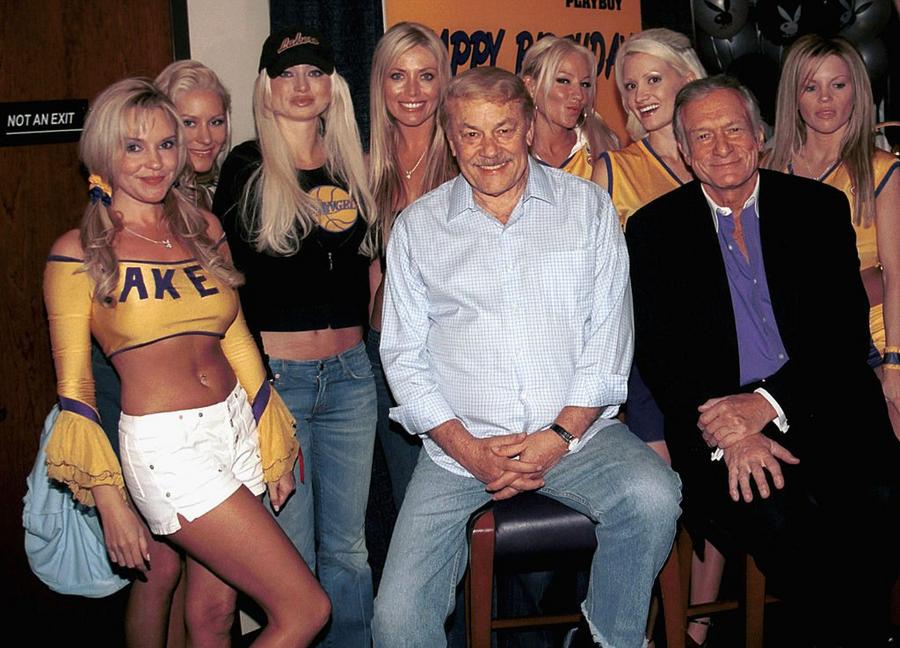
Jerry Buss / David Klein/Getty Images
Early Life
Jerry Buss was born on January 27, 1933, in Salt Lake City, Utah, and raised in the small mining town of Kemmerer, Wyoming, during the depths of the Great Depression. He was raised by his single mother, Jessie Buss, who worked as a waitress to support the family. Buss later recalled standing in bread lines as a child, an experience that left a lasting impression and shaped his lifelong drive for financial independence and security.
Despite the economic hardship of his upbringing, Buss excelled academically. He earned a scholarship to the University of Wyoming and graduated in just two and a half years. After completing his undergraduate degree, he moved to Los Angeles to continue his education at the University of Southern California.
By age 24, Buss had earned both a master's degree and a Ph.D. in physical chemistry from USC. His academic success provided stability and prestige, but it was not where his financial ambitions ultimately lay. While his scientific training sharpened his analytical thinking, Buss soon realized that real estate offered far greater upside than academia.
Real Estate Investments
After completing his doctorate, Jerry Buss worked briefly in the aerospace industry before returning to USC as a faculty member in the chemistry department. It was during this period that he began investing in Los Angeles real estate as a way to supplement his modest professor's salary.
What began as a side project quickly evolved into a full-scale business. Buss partnered with longtime associate Frank Mariani to form Mariani-Buss Associates, a real estate investment firm focused on acquiring undervalued apartment buildings in rapidly growing Southern California neighborhoods. Their early purchases included properties in Santa Monica, West Los Angeles, and other areas poised for significant appreciation.
Buss demonstrated an instinctive understanding of leverage and timing. He reinvested rental income, used debt strategically, and benefited from the explosive growth of the postwar Southern California housing market. Rather than cashing out early, he steadily expanded his holdings, compounding returns over time.
By the late 1970s, Buss and Mariani reportedly controlled more than 700 income-producing properties across the Los Angeles area, including thousands of apartment units and multiple commercial buildings. The portfolio generated substantial and reliable cash flow, giving Buss the financial flexibility to pursue a far riskier and ultimately historic investment in professional sports.
That real estate empire became the economic foundation for what would soon be recognized as one of the greatest franchise acquisitions in sports history.
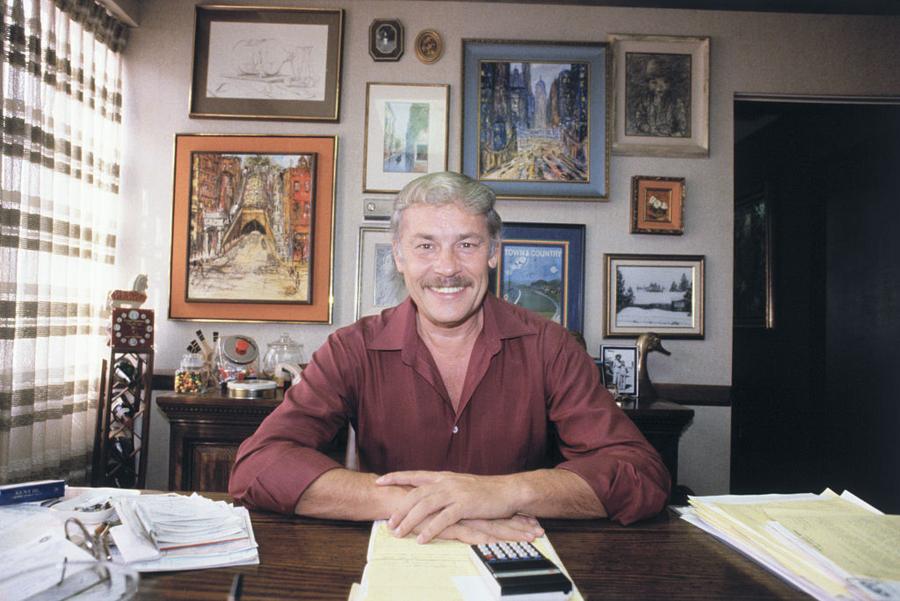
Jerry Buss (via Getty)
Buying the Lakers
In 1979, Jerry Buss made the defining move of his career when he purchased the Los Angeles Lakers, the Los Angeles Kings, the Forum arena in Inglewood, and surrounding real estate from Jack Kent Cooke in a package deal worth $67.5 million. Roughly $16 million of that price was allocated to the Lakers themselves. At the time, it was the largest sports franchise transaction in U.S. history. Adjusted for inflation, the full deal would be worth more than $200 million today.
The purchase was widely viewed as risky. Buss financed much of the deal with debt, and professional sports franchises were not yet treated as blue-chip assets. What Buss saw, however, was not just a basketball team, but a platform for entertainment, real estate leverage, and brand-building on a global scale.
The Showtime Era and a New Ownership Model
Buss wasted no time reshaping the Lakers' identity. His arrival coincided with the drafting of Magic Johnson, who joined Kareem Abdul-Jabbar to usher in what became known as the Showtime era. Buss understood that winning alone was not enough. He transformed Lakers games into Hollywood events, filling courtside seats with celebrities, turning the Forum into a social destination, and blending basketball with spectacle.
This approach was revolutionary at the time. Buss treated the Lakers as both a championship contender and an entertainment brand, a philosophy that soon separated the franchise from the rest of the league. The results were immediate and enduring. Under his ownership, the Lakers won ten NBA championships and became one of the most recognizable sports brands in the world.
Buss was also known for his willingness to spend. He paid star players market-setting salaries, trusted elite talent, and showed loyalty to franchise cornerstones. That combination of financial aggressiveness and cultural savvy became a model later emulated across the NBA.
Sustaining Dominance Across Eras
Unlike many owners whose success is tied to a single generation of stars, Buss oversaw multiple championship cycles. After the Magic Johnson era, the franchise was rebuilt around Shaquille O'Neal and Kobe Bryant, producing another dynasty in the early 2000s. Throughout those transitions, Buss remained deeply involved, balancing patience with decisive action.
By the time of his death in 2013, the Lakers were valued at approximately $1 billion, making them one of the first professional sports franchises to reach that threshold. The valuation reflected not only on-court success but decades of brand equity built under Buss' ownership philosophy.
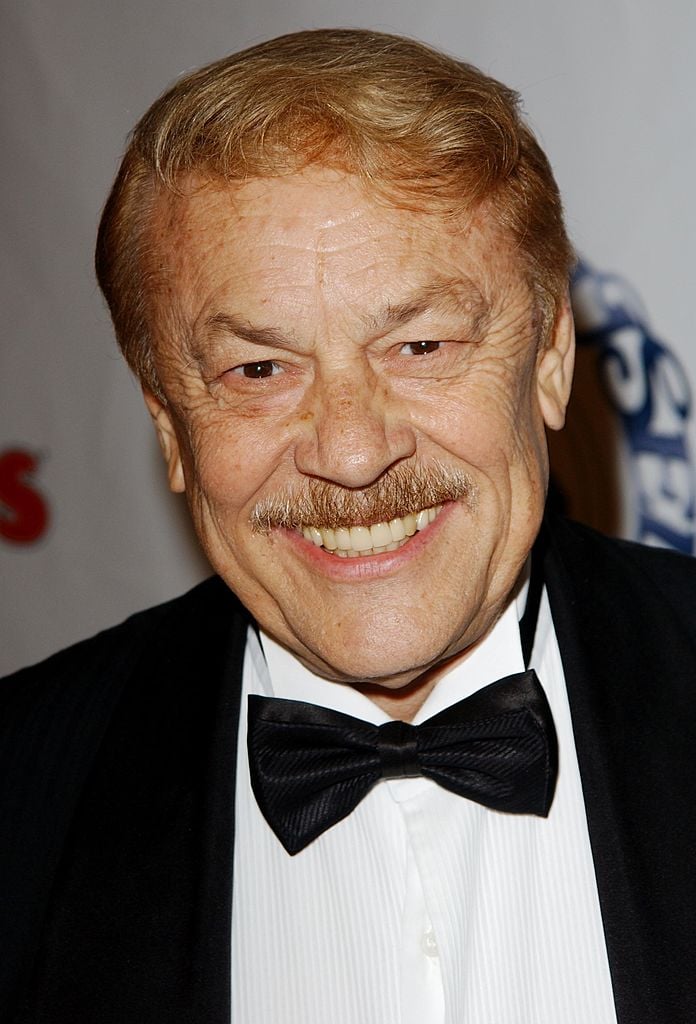
(Photo by Jon Kopaloff/Getty Images)
Succession, Family Ownership, and Long-Term Tensions
Jerry Buss was acutely aware that succession posed the greatest threat to what he had built. In his final years, he structured a family trust that divided his 66% ownership stake equally among his six children, while naming his daughter Jeanie as the team's governor and public representative. His stated goal was to keep the Lakers in the Buss family for generations.
According to later reporting, Buss privately worried that family infighting might eventually force a sale. He took steps to reduce that risk, including prepaying inheritance taxes, creating buyout provisions within the trust, and structuring ownership in a way that discouraged unilateral decisions. Still, the arrangement required cooperation among siblings with different visions for the franchise.
After Buss' death, those tensions slowly surfaced. While the Lakers remained under family control for more than a decade, disagreements over leadership, finances, and long-term competitiveness increasingly defined the post-Jerry Buss era.
The End of the Buss Ownership Era
In June 2025, more than 45 years after Jerry Buss bought the Lakers, his children agreed to sell a controlling portion of the franchise to billionaire investor Mark Walter in a deal valuing the team at $10 billion, the highest price ever paid for a U.S. professional sports franchise. The transaction reduced the Buss family from majority owners to minority stakeholders and formally ended the Lakers' run as a family-controlled enterprise.
The sale marked the final chapter of Jerry Buss' ownership legacy. What began as a leveraged real estate-driven gamble in 1979 ultimately became one of the most successful investments in sports history. While Buss did not live to see the record-breaking valuation, the deal underscored the extraordinary scale of the empire he created and the lasting impact he had on professional basketball.
Personal Life
Outside of business and sports ownership, Jerry Buss was known for a lifestyle that mirrored the image he cultivated for the Lakers. He was an avid poker player and regularly competed in high-stakes tournaments, including events on the World Series of Poker circuit. Poker appealed to Buss for the same reasons as real estate and sports ownership: calculated risk, long-term odds, and psychological advantage.
Buss also became closely associated with the nightlife and celebrity culture of Los Angeles, particularly during the Showtime era of the 1980s. He embraced Hollywood glamour, surrounded himself with entertainers and athletes, and treated Lakers games as social events as much as sporting contests. That public persona was sometimes polarizing, but it was inseparable from the brand identity he built around the franchise.
Despite his larger-than-life reputation, Buss was deeply focused on family and legacy in his later years. He had six children, all of whom were involved to varying degrees in the Lakers organization during his lifetime. He was particularly concerned with succession planning and took deliberate steps to structure his estate in a way he believed would keep the team in the family long after his death.
Jerry Buss died on February 18, 2013, in Los Angeles after a battle with cancer. He was 80 years old. In the years following his death, internal family tensions eventually led to the sale of the Lakers, but the scale and success of that transaction only reinforced Buss' status as one of the most visionary and impactful owners in the history of professional sports.
/2010/06/jerry-buss-2.jpg)
/2013/01/Jeanie-Buss-1.jpg)
/2025/06/jerry.jpg)
/2025/06/jack-kent-cooke.jpg)
/2009/09/Kobe-Bryant.jpg)
/2010/01/michael2.jpg)
/2019/04/Gavin-Maloof.jpg)
/2019/10/denzel-washington-1.jpg)
/2009/09/Cristiano-Ronaldo.jpg)
/2019/11/GettyImages-1094653148.jpg)